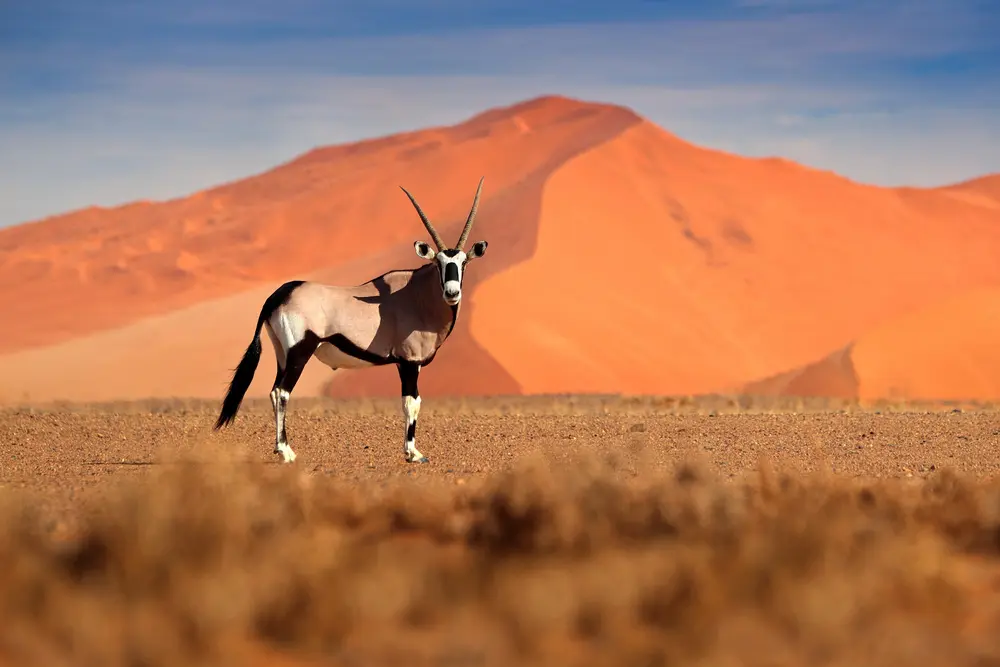
Seeing the African Wilderness Through Different Eyes
There are some safari experiences that are all about the animals you see. Others stay with you because they completely change the way you see the landscape around you.
Walking with the San is one of those experiences.
At first glance, the ground beneath your feet might appear to be little more than sand, dry grass, scattered leaves and scrub. Then your guide stops.
A faint mark in the sand becomes the track of an animal that passed through hours earlier. A plant you might have walked straight past has a traditional use. A root hidden beneath seemingly dry ground has its own story. Slowly, the bush begins to reveal itself in an entirely different way.
And that is what makes walking with the San such a memorable addition to an African safari.
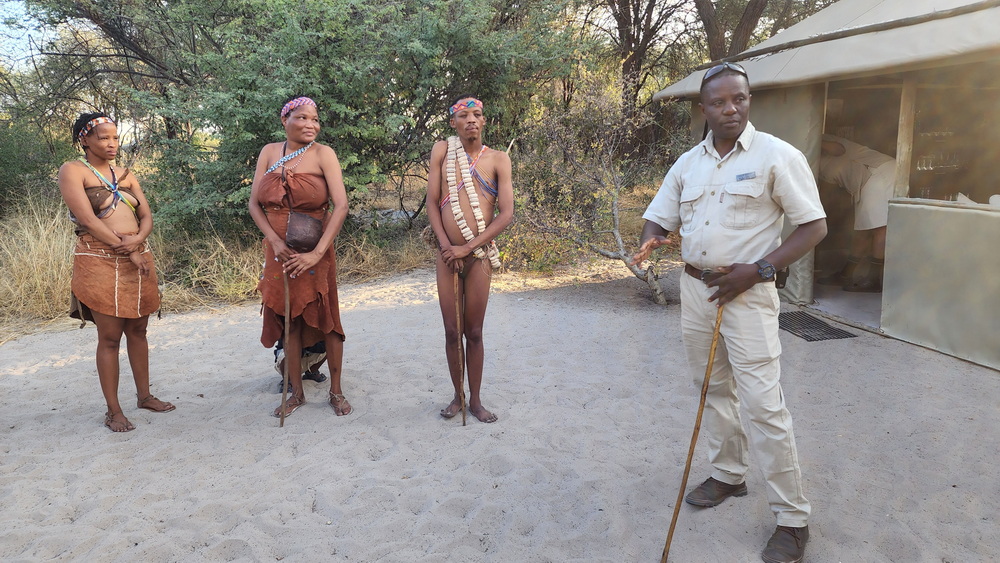
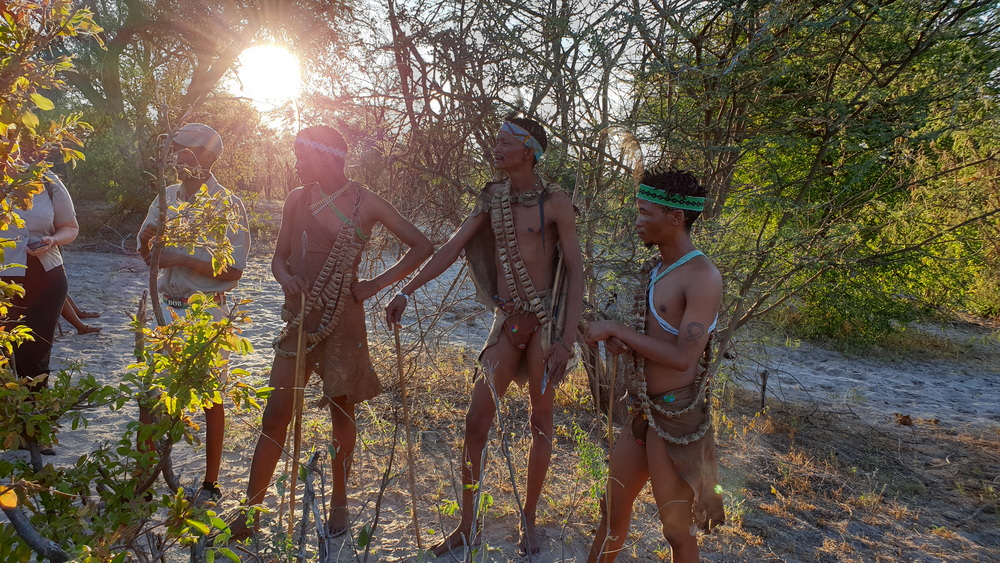
Suggested opening photo: Walking through the bush with your San guides, preferably a wide image that gives a sense of the landscape.
Learning to read the landscape
Most of us walk through the African bush looking for the obvious.
We look towards the trees for giraffe, across the plains for antelope and down the road for fresh tracks. We listen for alarm calls and hope something exciting might appear around the next corner.
A San guided walk encourages you to look much closer.
The smallest signs can become fascinating when someone explains what they mean. Tracks in the sand can reveal which animal passed by, which direction it was travelling and sometimes much more.
This expertise is far more than a tourist demonstration. The tracking knowledge of Ju/’hoansi master trackers, for example, has been recognised in modern scientific research, with Indigenous trackers working alongside scientists to interpret animal and even ancient human tracks.
Suddenly, what looked like an empty patch of sand is anything but empty.
Suggested photo: A close up of a track in the sand, particularly if you have an image of a guide pointing something out.
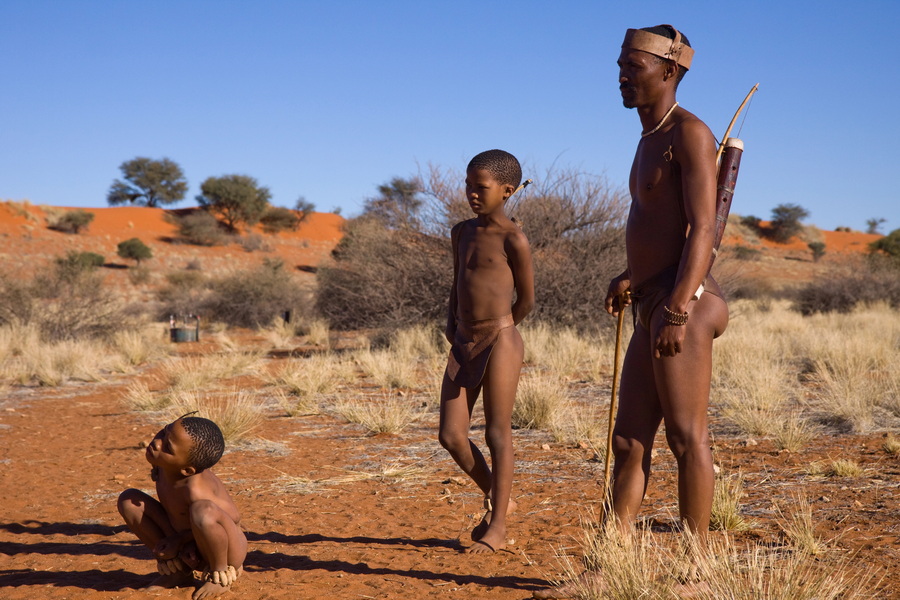
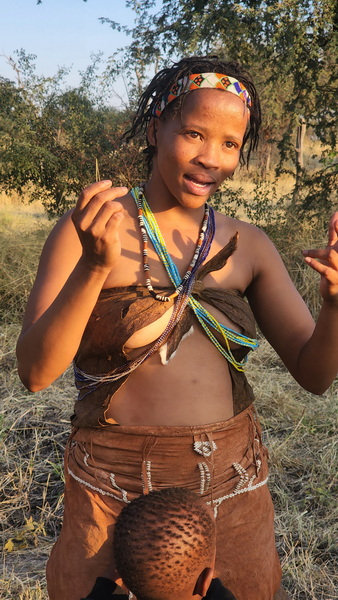
Knowledge hidden in the bush
One of the fascinating aspects of these walks is discovering just how much knowledge can be contained within what, to an unfamiliar eye, looks like a harsh and unforgiving environment.
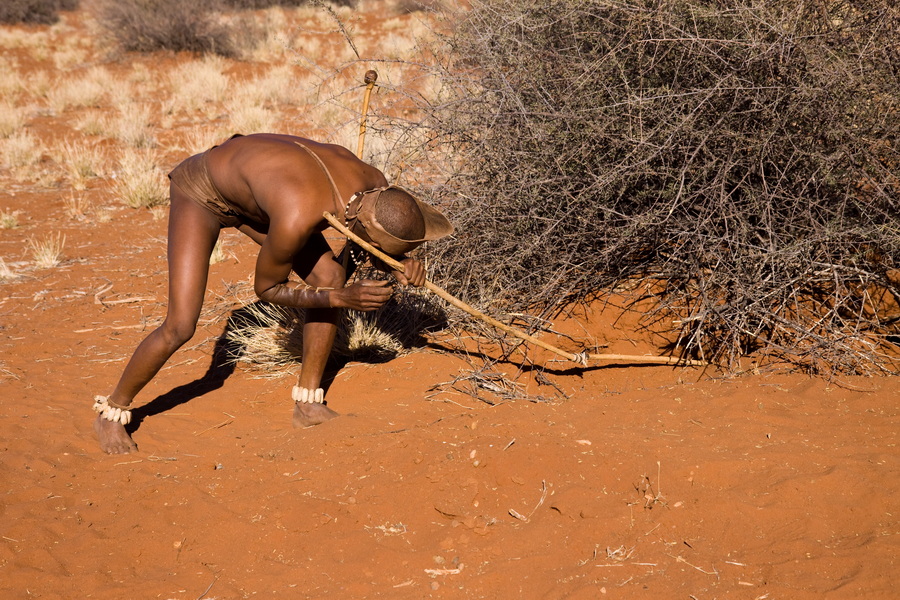
Plants can have traditional uses for food, medicine and everyday life. Roots and other natural resources can be identified in places where most visitors would see very little at all.
It is not simply about being shown individual plants or tracks. It is about beginning to understand the relationship between people and the landscape.
Knowledge like this is learned over years and passed from one generation to another. Among the Ju/’hoansi, traditional knowledge includes exceptional tracking skills as well as an intimate understanding of the surrounding environment.
There is something wonderfully humbling about standing in the bush and realising how much is happening around you that you would never have noticed on your own.
Suggested video: A guide explaining a plant, digging for a root, examining spoor or demonstrating another traditional skill.
Sometimes it is the simplest things that captivate you
On safari we are fortunate to experience some extraordinary moments.
A leopard draped over the branch of a tree. Elephants crossing a river. Lions calling in the darkness outside camp.
Yet sometimes it is something surprisingly simple that becomes one of the memories you talk about when you return home.
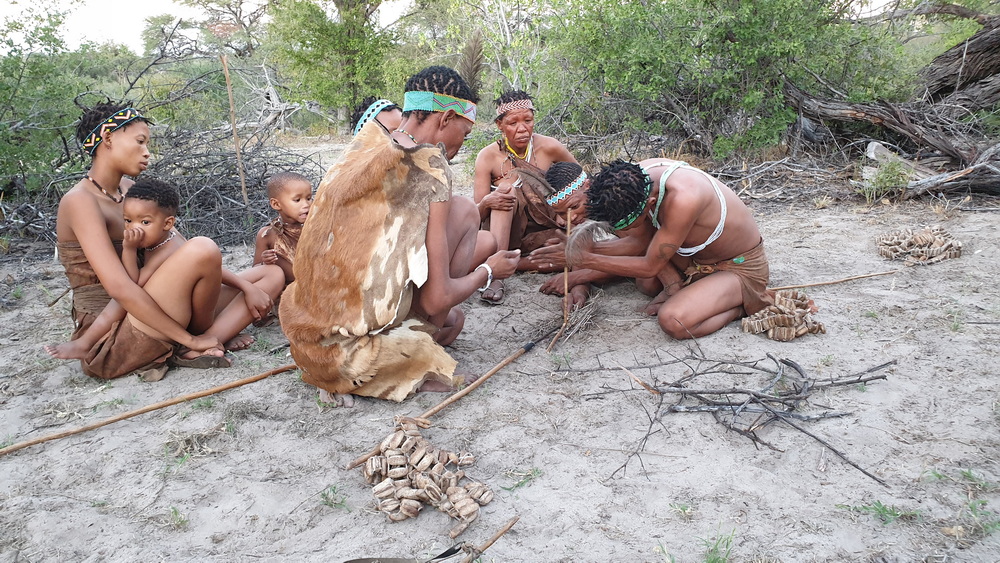
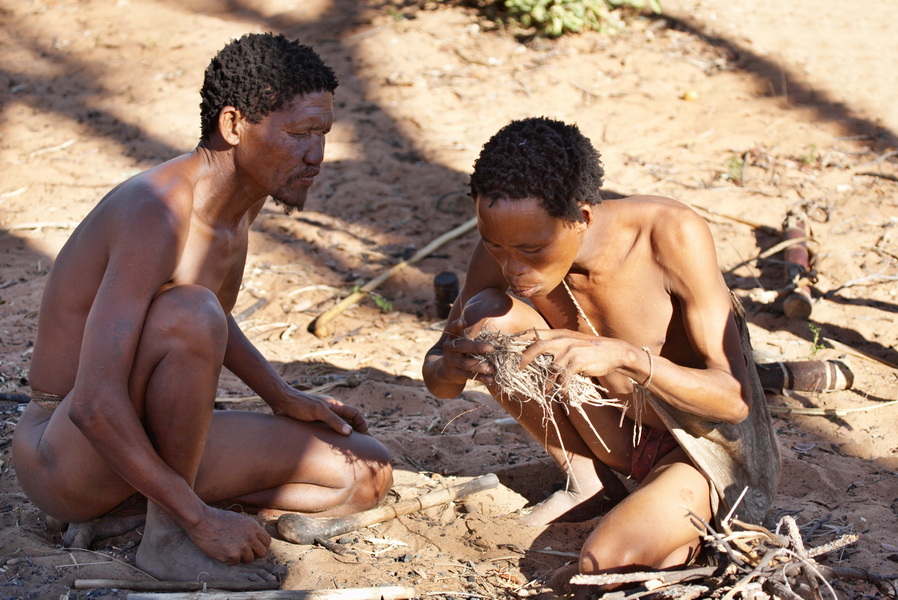
Watching someone demonstrate how fire can traditionally be made without simply reaching for a box of matches is a perfect example.
The technique, the patience and the knowledge behind it make you realise that something we take completely for granted has not always been so easy.
And when that first wisp of smoke appears, it can generate almost as much excitement as a wildlife sighting.
Suggested video: Fire making, if you have this. This would work particularly well as a short embedded video rather than a still photograph.
More than an activity between game drives
It would be easy to look at a San walk on an itinerary and think of it as another safari activity.
We think it deserves a little more attention than that.
Game drives show you Africa from one perspective. Walking with people whose knowledge of the land has been passed through generations gives you another.
You slow down.
You look down as well as up.
You notice tiny details.
And rather than travelling through the landscape simply as a visitor, for a short time you are encouraged to stop and really observe it.
That change of pace is particularly lovely when the walk is combined with a traditional wildlife safari. After days spent scanning the horizon for Africa’s larger animals, suddenly a tiny print in the sand or an unassuming plant can command everyone’s attention.
A note about the name San
The word San is often used as a broad term, but it is important to remember that it does not describe one single, uniform culture.
There are different San communities, with their own identities, languages, histories and traditions. The Ju/’hoansi, for example, are one distinct San group associated particularly with the Kalahari region.
For travellers, this is a good reminder not to think of a cultural experience as a glimpse into a single fixed version of how people once lived.
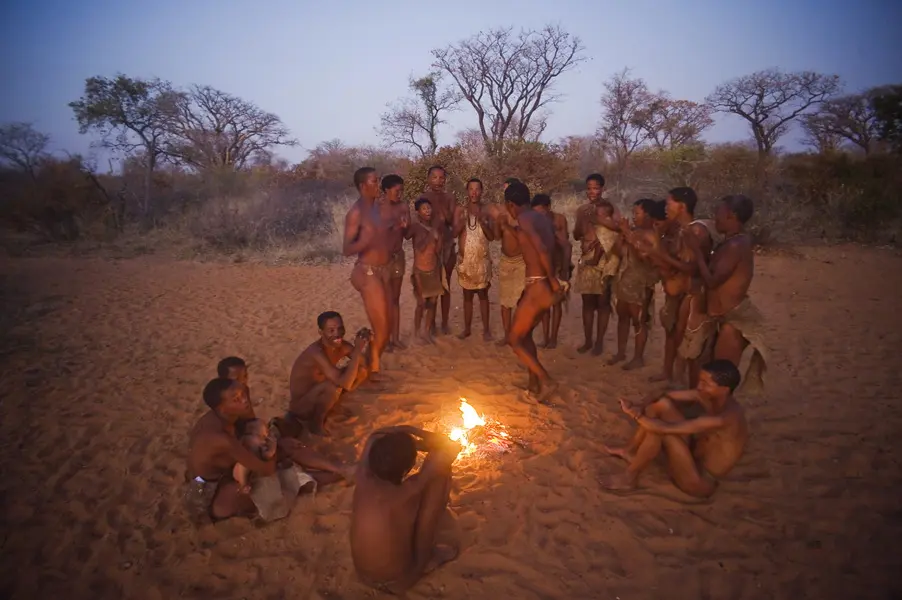
These are living communities and living cultures.
The most rewarding experiences are those where local people have the opportunity to tell their own stories, share the knowledge they choose to share and benefit meaningfully from tourism.
Seeing the bush through different eyes
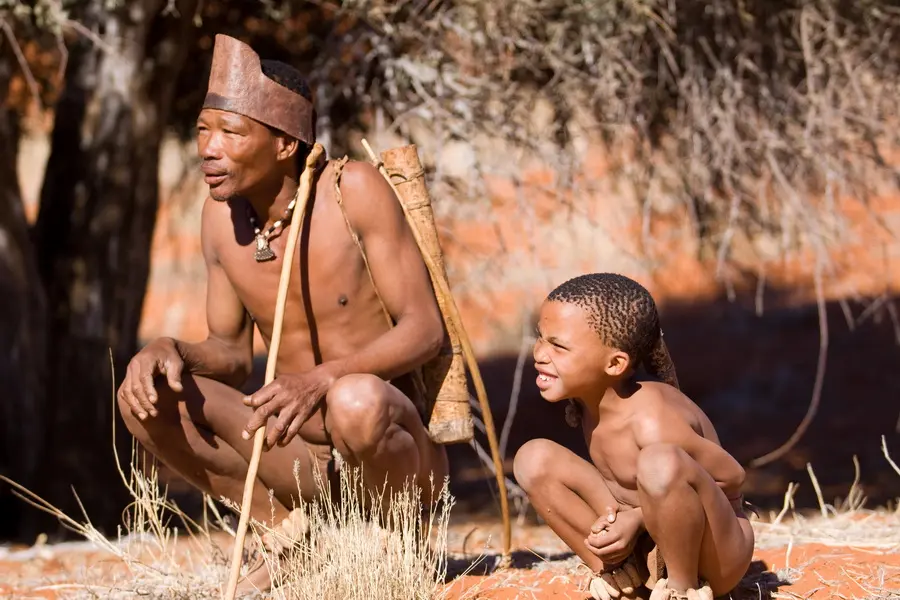
Perhaps that is ultimately what makes this experience so special.
You are unlikely to finish a San guided walk remembering every plant name or being able to identify every track you were shown.
But you may find yourself looking at the African bush differently afterwards.
You notice the marks in the sand.
You wonder what a plant might be used for.
You start paying attention to the smaller signs around you.
For a few hours, someone has opened a door into a world that was there all along. You simply did not know how to read it. And on a safari filled with spectacular wildlife and beautiful landscapes, that quiet change in perspective can become one of the most memorable experiences of all.